
AI Chatbot Pricing: Model Cost per Resolved Chat and ROI
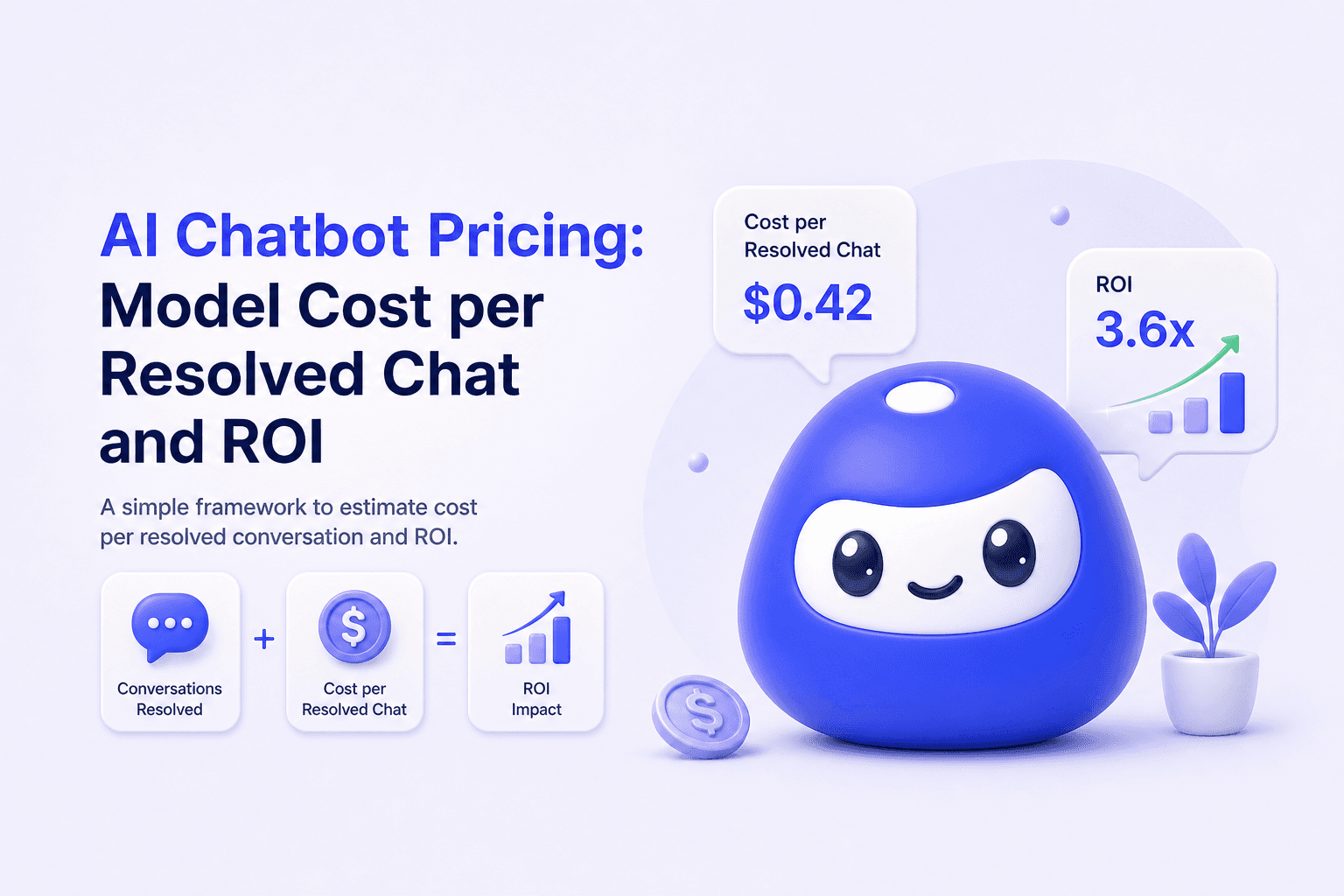
AI chatbot pricing only matters if you can connect it to measurable outputs: fewer tickets, faster responses, and more qualified leads. This guide shows how to estimate total cost per resolved conversation, get first value in under 10 minutes, and know exactly when to upgrade from self serve to a team plan.
- Compare tools by cost per resolved conversation, not just monthly subscription.
- First value in under 10 minutes comes from narrow scope: one channel, one knowledge source, one handoff rule.
- Weekly ROI signals: deflection rate, escalation rate, first response time, and CSAT.
- Upgrade to team when governance, collaboration, and reporting become the bottleneck.
What AI chatbot pricing really includes
Most teams evaluate AI chatbot pricing as a single monthly number. In reality, your total cost is a combination of subscription, usage, and operational overhead. If you do not model the full picture, you can end up paying less per month but more per outcome.
- Base subscription: access to the builder, channels (web, social, email), analytics, and automation.
- Usage based costs: conversations, messages, seats, or AI tokens depending on the vendor.
- Knowledge maintenance: time to keep FAQs, policies, and product changes up to date.
- Handoff and routing: how escalations become a ticket, a task, or a sales follow up with context.
- Governance: roles, permissions, approval workflows, and audit logs (usually a team tier feature).
CX Genie is positioned as a full customer engagement flow from marketing automation to after sale support. That means your pricing evaluation should focus on end to end outputs, not isolated chatbot conversations.
A simple ROI model: cost per resolved conversation
The most practical way to compare plans is to compute cost per resolved conversation. This works for support deflection and for pre sales qualification.
| Metric | How to estimate | What it tells you |
|---|---|---|
| Monthly cost | Subscription + expected usage | Total spend baseline |
| Total conversations | Chats per month (current or forecast) | Volume you must handle |
| Resolution rate | % resolved without human | Automation effectiveness |
| Resolved conversations | Total conversations x resolution rate | Your measurable output |
| Cost per resolved conversation | Monthly cost / resolved conversations | Comparable unit cost |
Example: If you spend $99 per month and resolve 300 conversations, your unit cost is $0.33 per resolved conversation. If each resolved conversation saves 4 minutes of agent time, that is 1,200 minutes saved monthly. You can convert that into dollars using your internal cost per support hour.
In small teams, the hidden cost is usually operational friction: unclear handoff, duplicated edits, and inconsistent answers across channels. A plan that looks cheaper can become more expensive if it increases escalations or forces manual routing every day. Optimize for stable weekly operations: predictable deflection, clean handoff, and shared reporting.
10 minute setup to first value (self serve)
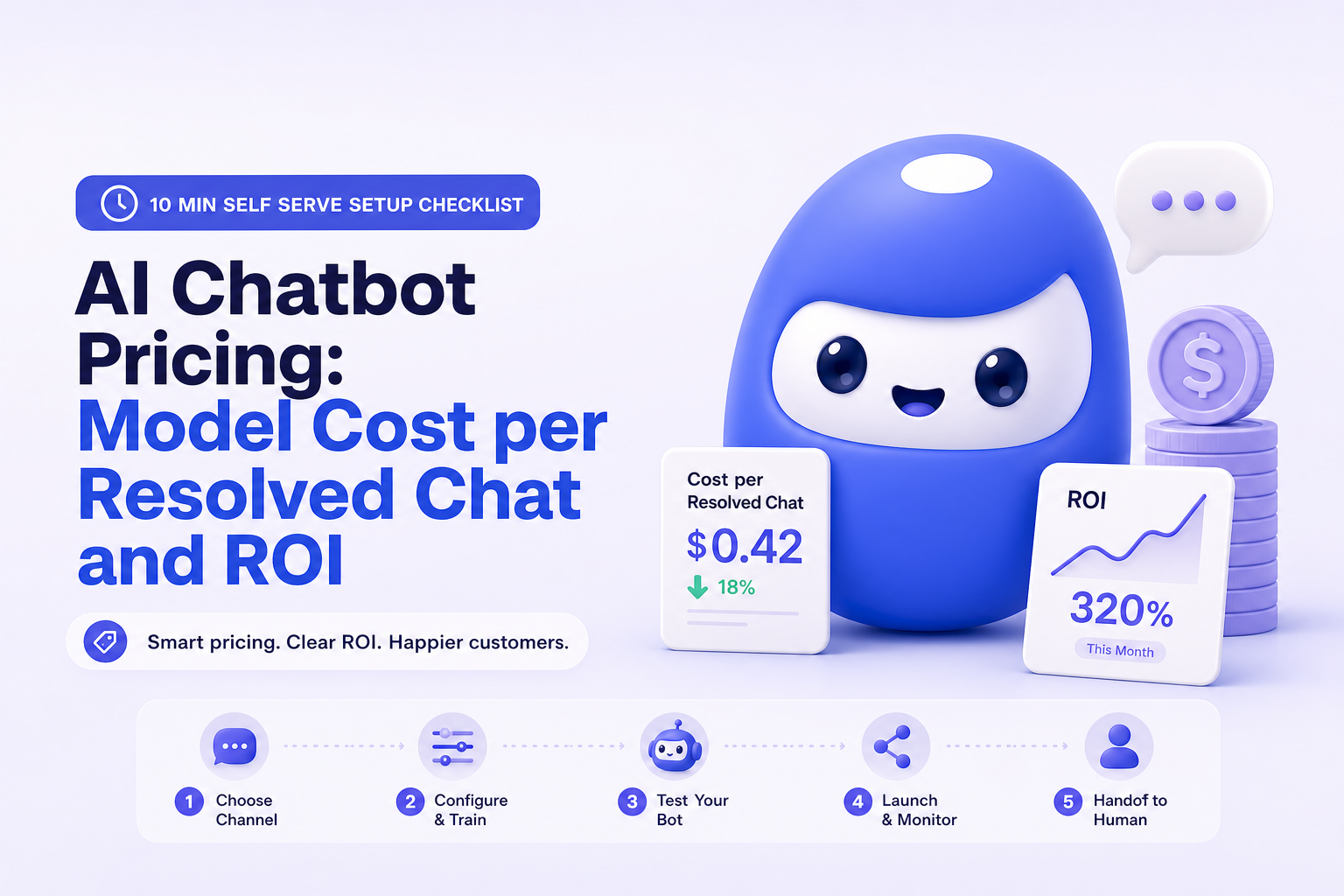
Your goal is not to build a perfect bot on day one. Your goal is to produce one measurable output today. Use this self serve checklist to reach first value fast.
Step 1: Choose one channel and one outcome (2 minutes)
- Pick a single entry point: website widget or one inbox.
- Pick one outcome: reduce repetitive tickets (support) or qualify leads (sales).
Step 2: Add one knowledge source (3 minutes)
- Start with your FAQ page, shipping and returns policy, or a single help doc.
- Keep scope tight: 20 to 50 common questions is enough to see deflection quickly.
Step 3: Define one handoff rule (3 minutes)
- Escalate when confidence is low, or when the user asks about refunds, billing, or account changes.
- Collect required fields during escalation: email, order ID, plan, and issue category.
Step 4: Run a 5 question validation (2 minutes)
Test with 5 real questions from last week tickets. If you want a guided walkthrough, use an AI chatbot demo flow to validate coverage and handoff behavior before inviting teammates.
Weekly metrics to prove ROI
Weekly measurement is what turns AI chatbot pricing from a guess into a decision. Track these outputs every week:
- Deflection rate: percent of conversations resolved without a human.
- Escalation rate: percent of conversations that require a human handoff.
- First response time: should drop immediately with automation.
- CSAT or thumbs up rate: quality signal that prevents silent churn.
If you use CX Genie across marketing and support, add one more: handoff completion rate (how many escalations become a clean ticket or sales task with the right context attached).
When to upgrade to a team plan
Start self serve with one owner. Upgrade when collaboration and governance become the constraint, not features. Here are concrete upgrade signals:
- More than 2 people edit or review the bot weekly (support, sales, marketing).
- You need roles and permissions to prevent accidental changes to knowledge or automation.
- Multiple queues are required: billing, technical support, onboarding, and sales each need different routing.
- Standardized reporting: a shared weekly dashboard for leadership and team leads.
- Compliance and brand consistency: approved tone, disclaimers, and an audit trail.
Team plans usually pay off when they reduce operational overhead: fewer misrouted tickets, fewer duplicated edits, and faster iteration on top failure intents.
Common pitfalls that inflate cost
- Ingesting too much content: dumping your entire docs library increases noise and lowers answer quality.
- No clear escalation path: unresolved chats create repeat contacts and lower CSAT.
- Measuring only chat volume: volume without resolution is not an output.
- Skipping the weekly review loop: a 15 minute weekly review of top failed intents is often the highest ROI habit.
FAQ
How do I compare AI chatbot pricing if vendors use different units?
Normalize everything to cost per resolved conversation. Estimate monthly cost (subscription plus usage), multiply total conversations by a realistic resolution rate, then divide.
What is a good first value milestone for a self serve trial?
A realistic milestone is 10 to 30 deflected repetitive questions in the first week, plus a measurable drop in first response time. Keep scope narrow to hit this quickly.
What should I measure weekly to avoid paying for a chatbot that does not work?
Track deflection rate, escalation rate, first response time, and CSAT. If you qualify leads, track lead qualification rate and handoff completion rate.
When should I move from an individual plan to a team plan?
Upgrade when multiple people need to collaborate, you require permissions and approvals, or you need shared reporting and standardized routing across queues.
Next step: start a self serve setup focused on one measurable outcome (resolved conversations or qualified leads). Once you see weekly ROI, expand to a team plan for governance, collaboration, and reporting at scale.