
AI Chatbot Free Trial: Launch a Support Bot in 10 Minutes
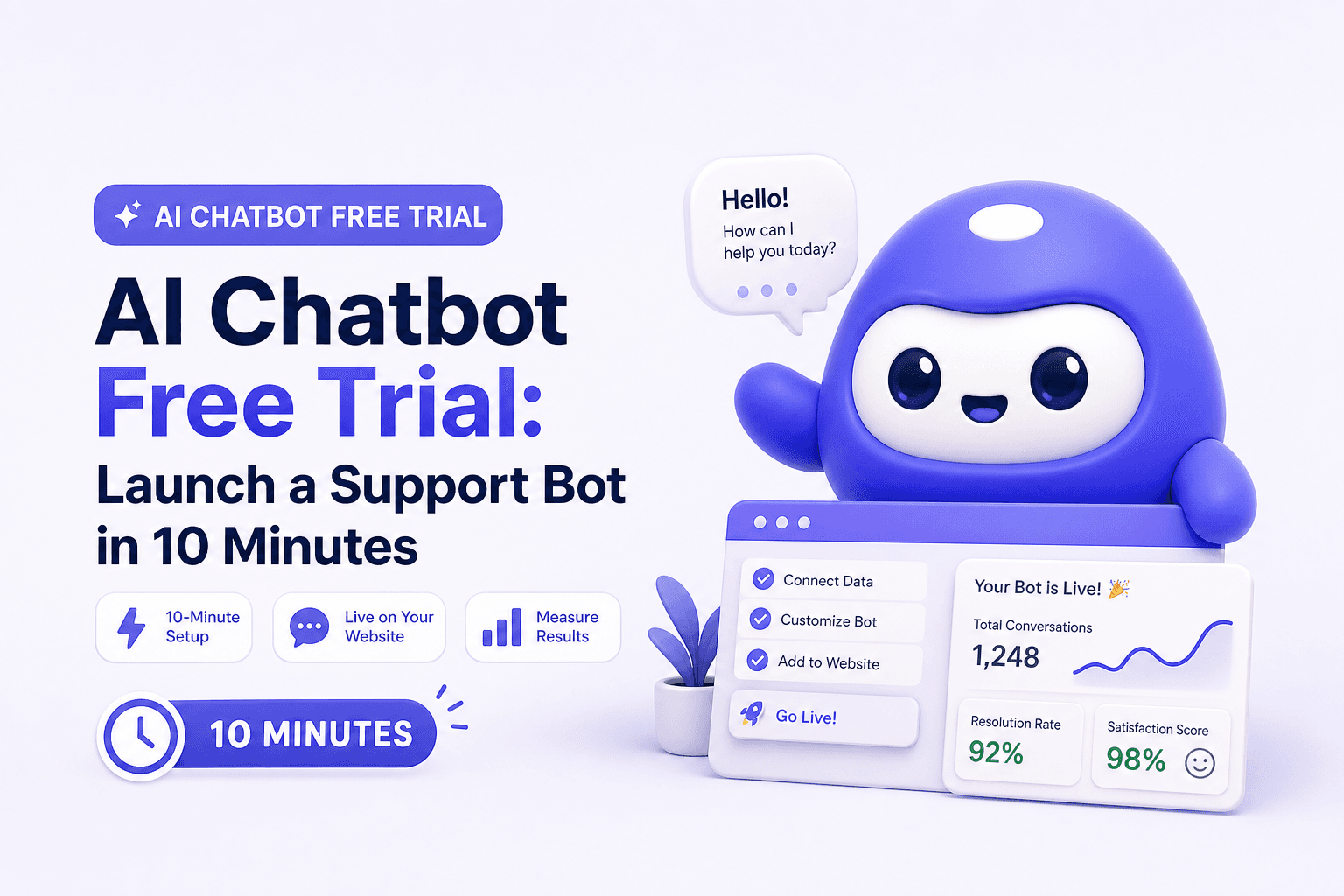
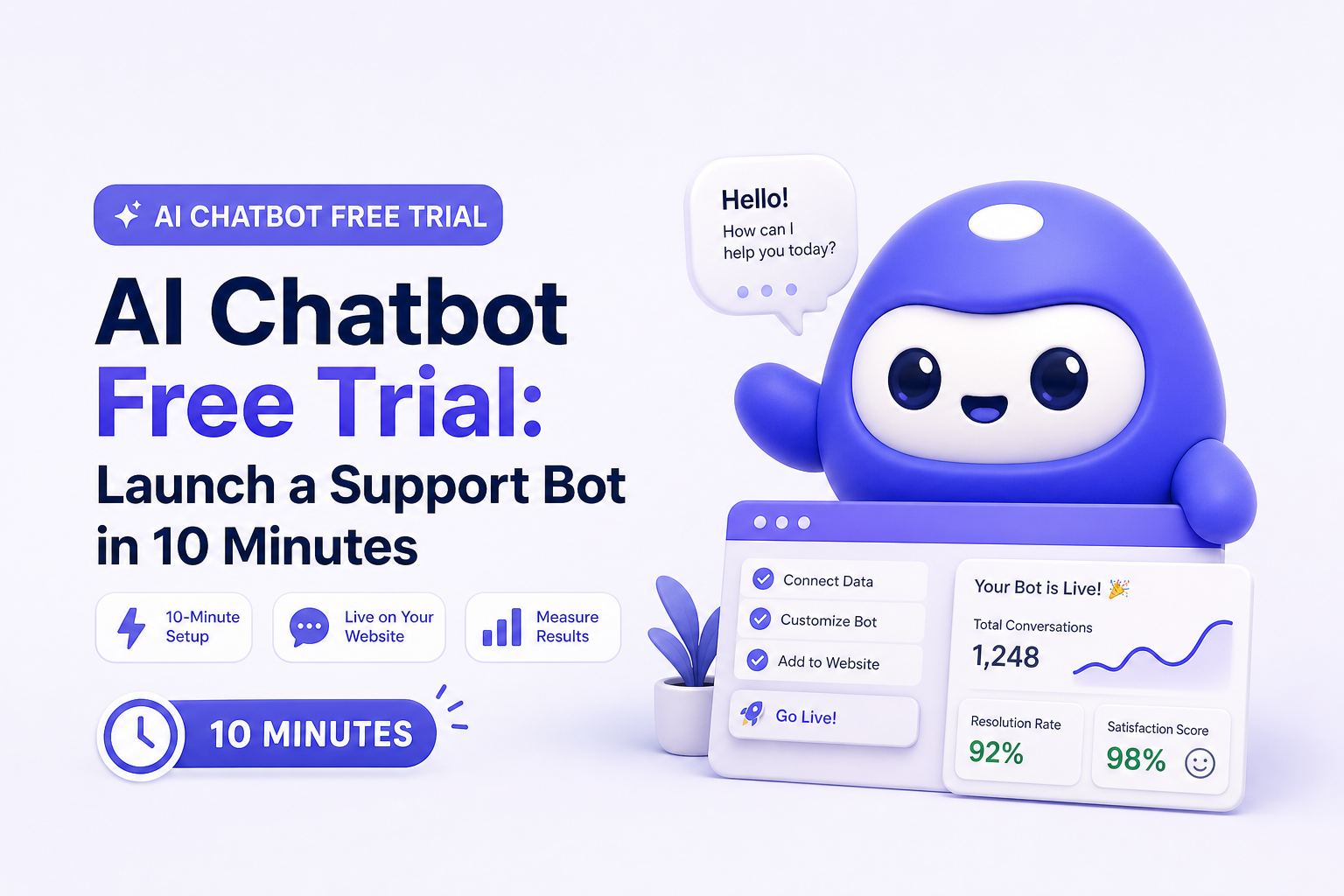
An AI chatbot free trial is only useful if you can ship a real workflow fast, not just chat with a sandbox bot. In this guide, you will launch a customer facing chatbot in under 10 minutes, measure clear outputs (deflection, lead capture, resolution time), and know exactly when to upgrade from solo testing to a team rollout.
- A trial should produce measurable outputs: ticket deflection, lead capture, and faster resolution.
- You can reach first value in under 10 minutes by focusing on one channel, one knowledge source, and three intents.
- Weekly retention comes from reviewing unanswered questions and improving coverage, not from adding features.
- Upgrade to a team plan when ownership, permissions, QA, and reporting become necessary to scale safely.
What you should get from an AI chatbot free trial
For B2B SaaS and SMB teams, the goal is not “try AI.” The goal is to prove a repeatable workflow that reduces workload or increases revenue. Your trial is successful if you can answer these questions with data:
- Can the bot resolve or route common questions without human intervention?
- Can it capture qualified leads with the right context for follow up?
- Can you measure impact in a way your team will review weekly?
CX Genie is built for customer engagement end to end: marketing automation through post sale support. In a trial, that means you can test both support deflection and conversion oriented chat flows without stitching together multiple tools.
If you prefer a guided walkthrough before you start, use the AI chatbot demo to see the exact flow you will implement below.
The 10 minute setup: from zero to first value
To keep time to first value under 10 minutes, constrain scope. One channel, one knowledge source, three intents.
Step 1 (2 minutes): Pick a single channel and goal
- Channel: website widget is the fastest for most teams.
- Goal: choose one primary outcome for the trial: deflect support tickets or capture leads.
Step 2 (3 minutes): Add one knowledge source
Use the smallest reliable source that answers real questions:
- Help center URL or a small set of FAQs
- Pricing page and onboarding docs
- Return, refund, shipping, or SLA policy (if relevant)
Trial rule: if the content is outdated, your bot will be confidently wrong. Start with the pages you already keep current.
Step 3 (3 minutes): Define three intents (the only ones that matter today)
- Intent A: pricing and plan questions
- Intent B: setup or onboarding questions
- Intent C: human handoff (sales or support)
Make sure the bot can do one of two things for each intent: answer with citations, or route to the right team with context.
Step 4 (2 minutes): Turn on capture and routing
- Lead capture: name, email, company, and one qualifying question (for example: “How many seats?”).
- Handoff: route to the right inbox with transcript and tags so a human can respond without re-asking basics.
First value definition: within 10 minutes, you should be able to open your website, ask a real customer question, and see either a correct answer or a properly routed handoff with full context.
Outputs to measure (and what good looks like)
A trial becomes a buying decision when outputs are measurable. Track these from day one:
| Output | How to measure | Early success signal |
|---|---|---|
| Ticket deflection | % conversations resolved without human handoff | 10 to 20% in week 1 for common FAQs |
| Faster resolution | Time to first response and time to resolution | Noticeable drop for repetitive questions |
| Lead capture rate | Leads captured per 100 chats | 2 to 5 qualified leads per 100 chats (varies by traffic) |
| Coverage quality | % questions answered with correct citations | Most top intents answered reliably |
| Handoff quality | % routed chats that include context and tags | Sales or support can act without re-asking basics |
Weekly trigger for retention: review the top unanswered questions, add or fix the source content, and update the three intents. This is the habit that turns a trial into a durable workflow.
Most trials fail due to workflow ownership, not model quality. Assign one owner for knowledge freshness and one owner for routing rules, even during the free trial, to get a realistic signal of team readiness.
Common blockers during trials and how to avoid them
- Too broad scope: trying to cover every question. Fix: start with three intents only.
- No measurement plan: you cannot justify an upgrade. Fix: pick two outputs (deflection and lead capture) and review weekly.
- Bad handoff: the bot “helps” but creates more work. Fix: require transcript, tags, and contact info on escalation.
- Unclear success criteria: the trial ends with opinions. Fix: define a week 1 target (for example: 15% deflection on FAQs).
When to upgrade to a team plan
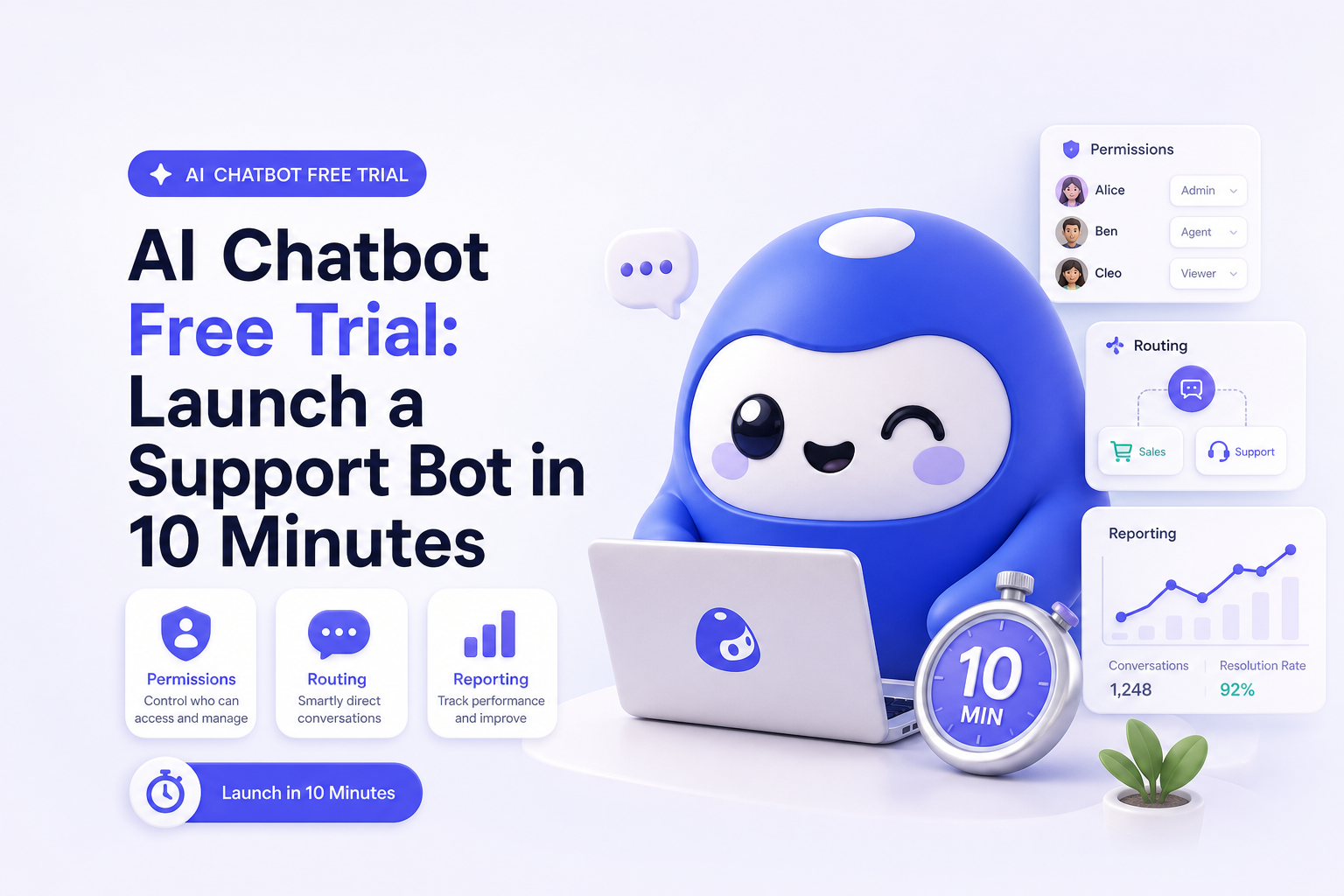
An AI chatbot is a team system once it touches revenue, customer experience, or compliance. Upgrade when you hit any of these signals:
- More than 1 owner: marketing wants lead capture while support wants deflection and routing.
- Collaboration needs: multiple people must edit knowledge, intents, or automations without stepping on each other.
- Governance: you need roles, permissions, approval flows, or auditability for changes.
- Workflow scale: you need multiple handoff destinations (sales, support, success) and consistent tagging.
- Reporting: leadership asks for weekly metrics by channel, intent, or segment.
Self serve is for proving value fast. Team expansion is for making the workflow reliable, repeatable, and safe as usage grows.
A simple decision checklist
Use this checklist to decide whether your AI chatbot free trial is ready to convert:
- We reached first value in under 10 minutes (answer or routed handoff with context).
- We can name our top 3 intents and they account for most chats.
- We track deflection or lead capture weekly (not just total chats).
- We have an owner for knowledge freshness and an owner for routing rules.
- We know the team upgrade trigger (permissions, collaboration, reporting, multi inbox routing).
FAQ
How long should an AI chatbot free trial run?
Long enough to capture a full weekly cycle of questions and improvements. For most SMB teams, 7 to 14 days is sufficient if you review unanswered questions at least once per week.
What is the fastest way to get first value from a chatbot?
Start with a website widget, connect one reliable knowledge source, and define three intents. Your first value is a correct answer with citations or a clean handoff with transcript and tags.
What should I measure during the trial?
Measure outputs tied to workload or revenue: ticket deflection rate, lead capture rate, time to resolution, and the percentage of escalations that include actionable context.
When does it make sense to upgrade to a team plan?
Upgrade when multiple people need to manage intents and knowledge, when you need permissions and governance, or when reporting and multi team routing become necessary for consistent customer experience.
Next step: Start CX Genie self serve with one channel and three intents, then review your weekly outputs. If you hit collaboration and governance triggers, move to the team plan to scale across marketing and support.