
ai chatbot alternative: launch measurable CX in 10 minutes
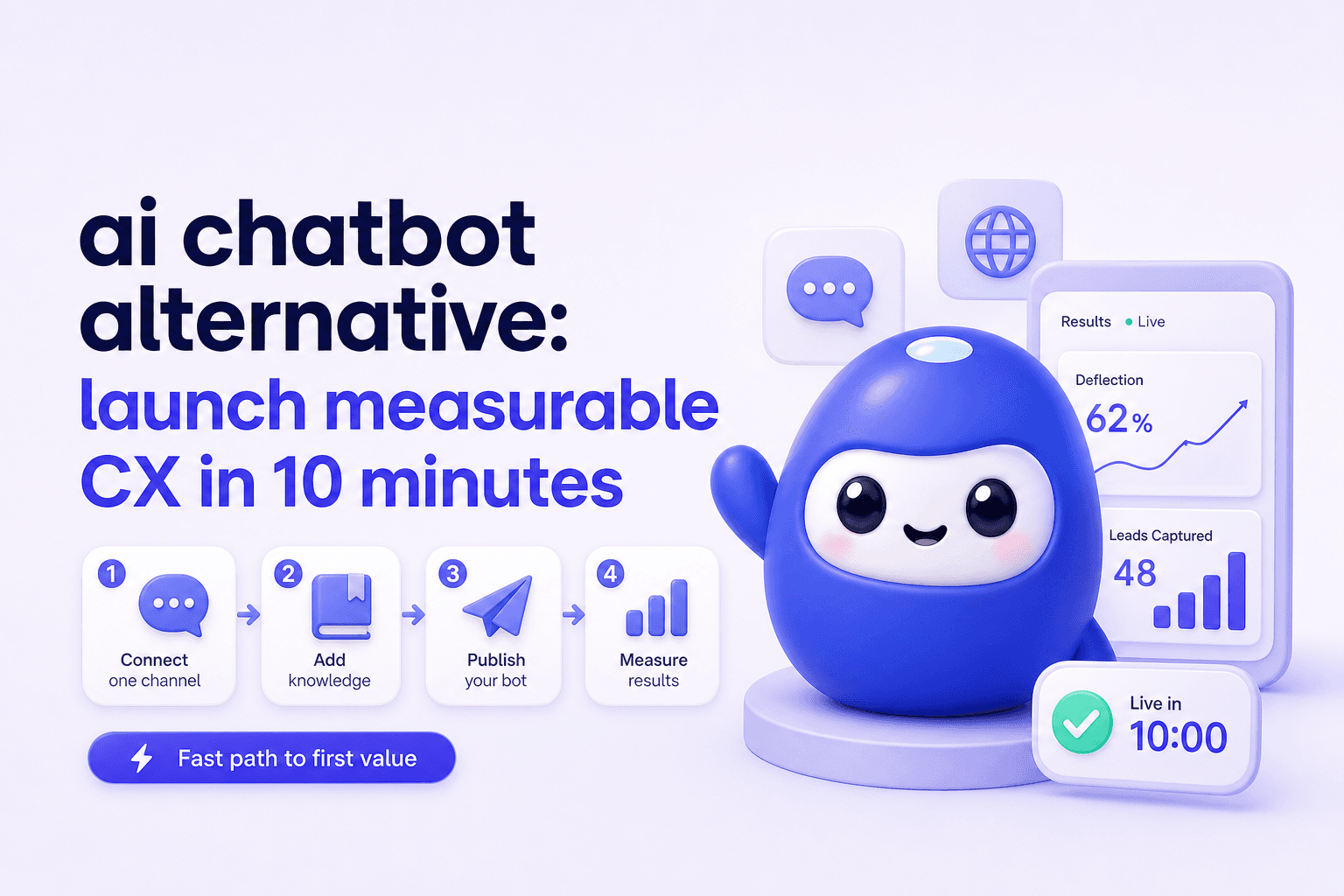
If you are searching for an ai chatbot alternative, you are likely comparing tools that look similar on paper but behave very differently in real workflows. This guide helps you pick an option that delivers measurable outputs fast (under 10 minutes to first value) and still scales from self serve to team operations.
- Evaluate alternatives by outputs, not feature lists: deflection, lead capture, escalation quality.
- Time to first value should be under 10 minutes: connect one channel, add one knowledge source, publish.
- Weekly retention comes from a simple habit: review failure queries and update answers every week.
- Upgrade to team when multiple people change content, routing, or reporting and you need governance.
What a real ai chatbot alternative should solve
Most teams do not fail because the bot cannot chat. They fail because the workflow around the bot is not operational:
- Slow activation: you cannot publish a working bot without engineering help.
- Unclear ROI: no reliable way to measure deflection, lead capture, or resolution speed.
- No scale path: one person can manage it, but the moment marketing and support both touch it, it breaks.
CX Genie is positioned as a customer engagement platform across the full flow: marketing automation signals into conversations, then customer support after sale with escalation and reporting. That matters because the “bot” is only one step in the end to end outcome.
Measurable outputs to validate in week 1
Before you trial any ai chatbot alternative, pick 2 to 3 outputs you can measure in the first week. Here are the most practical ones for SMB and mid market teams:
- Ticket deflection rate: resolved by bot / total chats.
- Lead capture from chat: number of leads created with required fields (email, company, intent).
- Escalation quality: % escalations that include summary, intent, and relevant links for the agent.
- Median first response time: how fast customers get an answer (bot or human).
Use your last 50 support tickets and your top 10 pre sales questions as the test set. If a tool cannot produce measurable deflection and clean escalations from that set in week 1, it will not retain weekly because the team will not trust it.
10 minute setup: first value with CX Genie
The goal is not a perfect bot. The goal is a working workflow you can measure today.
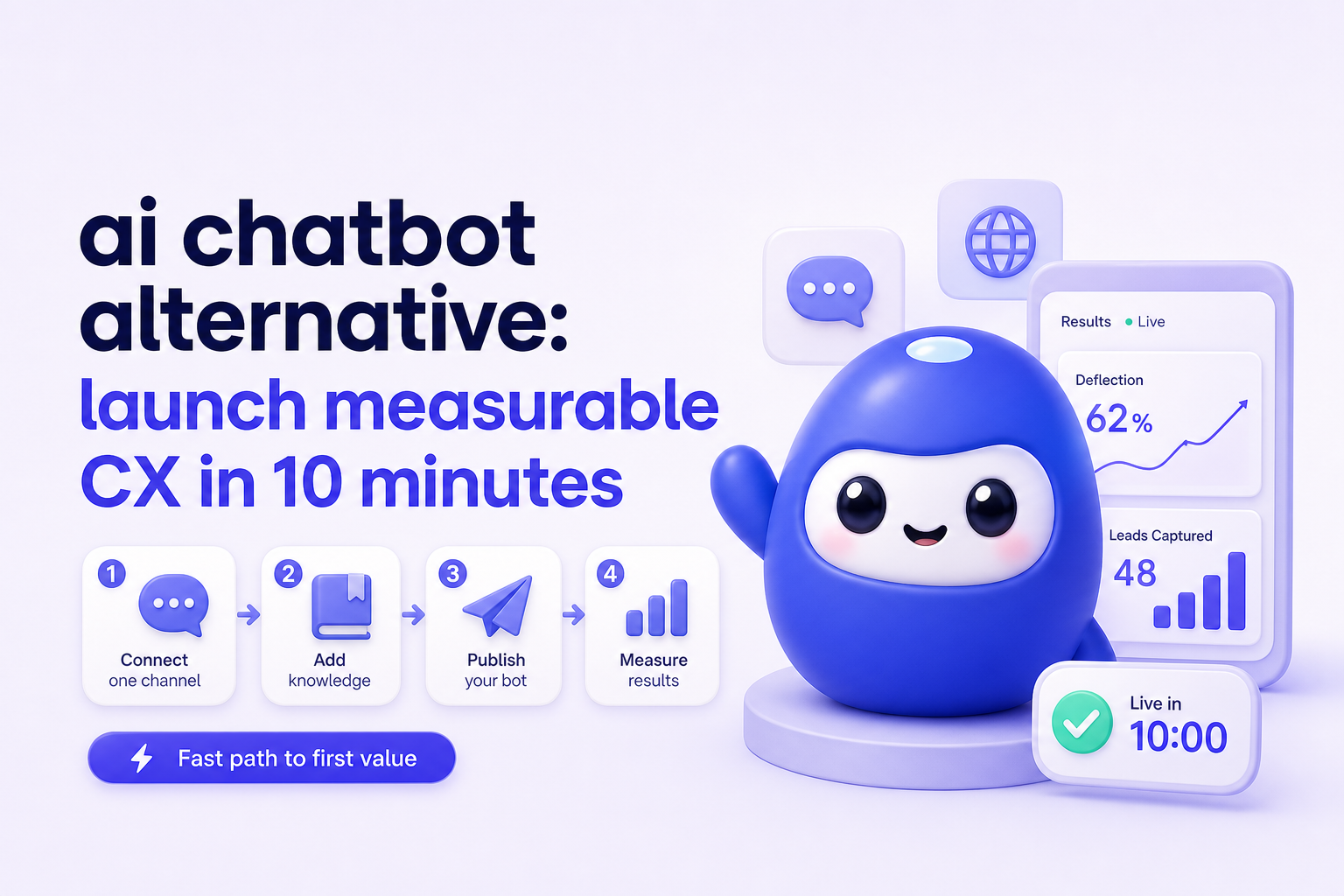
Step 1: choose one channel and one outcome
- Channel: website chat is usually the quickest to publish.
- Outcome: pick one, either deflect top FAQs or capture high intent leads (pricing, demo, onboarding).
Step 2: add a small knowledge source (not everything)
Start with one of these:
- Your FAQ page URL
- A help center category URL
- A short document containing the top 20 questions and answers
Step 3: define escalation rules
- When confidence is low or the user asks about billing, refunds, or account access, escalate.
- Require an escalation payload: summary, intent tag, and the source article used (if any).
Step 4: publish and run a 15 prompt test
Test with real prompts from tickets, not generic “what do you do” questions. If you want a quick walkthrough before you build, use this AI chatbot demo to see what “first value” should look like.
Comparison table: CX Genie vs typical chatbot tools
Use this table to compare any ai chatbot alternative during a self serve trial. The point is to validate speed, outputs, and team scalability.
| Criteria | CX Genie (customer engagement flow) | Typical chatbot tool |
|---|---|---|
| Time to first value | Publish a bot quickly with a small knowledge source | Often quick to embed, slower to make answers reliable |
| Output visibility | Designed around measurable engagement and support outcomes | May focus on conversations, not operational metrics |
| Escalation workflow | Emphasis on handoff with context for agents | Handoff can be basic or require extra setup |
| Weekly operations | Review failures, update knowledge, iterate | Iteration can be harder if knowledge management is weak |
| Team expansion | Clear path to roles, routing, and reporting | Collaboration and governance vary widely |
When to upgrade to a team plan
Self serve works when one person owns the bot end to end. Upgrade when the workflow becomes shared and needs control.
Upgrade signals you can actually observe
- More than 2 contributors: marketing edits lead capture flows while support edits answers.
- Approval is required: you need review before publishing changes to customer facing answers.
- Routing complexity increases: multiple queues, regions, or product lines.
- Reporting becomes a weekly ritual: deflection, top intents, and failure queries are reviewed every week.
- Governance matters: roles, permissions, audit history, and standardized tags are needed.
A simple rule: if you have a weekly review and at least one teammate needs to change routing, knowledge, or reports, you are already operating as a team and should use team controls to avoid inconsistent customer experiences.
A 7 day evaluation checklist
Use this checklist to make your evaluation objective and fast:
- Day 1: publish one channel bot, add top 20 FAQs, set escalation rules.
- Day 2: run 15 real prompts, log failures, fix the top 5 gaps.
- Day 3: add one lead capture flow (pricing or demo intent) and verify lead fields.
- Day 4: test escalation quality with an agent and confirm context is usable.
- Day 5: review metrics: deflection baseline, top intents, top failure queries.
- Day 6: invite a teammate to edit content and validate collaboration needs.
- Day 7: decide based on cost per output: monthly cost / resolved chats and leads captured.
FAQ
How do I choose an ai chatbot alternative without over testing?
Limit scope to one channel and one outcome. Use a fixed test set from real tickets, then decide based on deflection, lead capture, and escalation quality within 7 days.
What is a realistic “first value” target in under 10 minutes?
A live bot that answers a meaningful subset of your top FAQs, captures at least one lead type, and escalates cleanly with a summary when uncertain.
What metrics should I review weekly to keep the bot improving?
Review failure queries, top intents, deflection rate, and escalation volume. Update 5 to 10 answers weekly to maintain trust and retention.
When should I move from a solo setup to a team rollout?
When multiple people need to edit knowledge or routing, or when you need approvals, roles, and consistent reporting. That is the point where governance prevents customer experience drift.
Next step: If you are evaluating an ai chatbot alternative, run the 10 minute setup, test with real tickets, and measure deflection and leads in week 1. Start self serve, then expand to a team plan when collaboration and governance become necessary.